
How to Encourage dealers to select & sell our products !
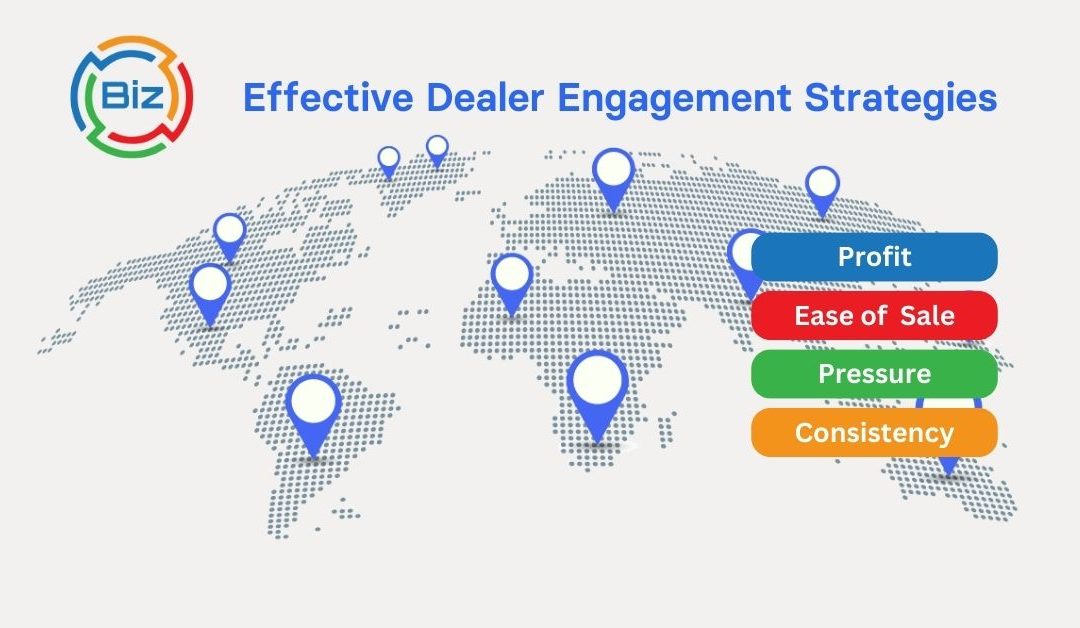
The world of product dealership is a multifaceted domain where success hinges on a dealer’s ability to navigate through various critical factors. Understanding these factors is essential for maximizing profitability, sustaining a competitive edge, and ensuring long-term business growth. This comprehensive essay delves into the four pivotal aspects that shape a dealer’s decision-making and strategy: Profit, Ease of Sale, Pressure, and Business Consistency and Stability. Each factor will be explored in-depth, accompanied by real-life case studies and practical examples, providing a holistic view of the effective dealership management.
Profit (Money): The Core of Business Endeavors
Profit, fundamentally, is the primary goal of any commercial activity. In the realm of product dealership, structuring dealer profit is a delicate art that needs careful consideration. It’s essential to base dealer profit on performance, striking a balance between solid margins and performance-based rebates. This approach ensures that both large and small dealers can thrive without the risk of smaller dealers being overshadowed by larger ones.
A prime example of this balanced approach is seen in the operations of ‘ASUS,’ a leading electronics manufacturer. ASUS structured its dealer profit model to include a solid margin, ensuring a base level of profitability for all dealers. This was crucial in maintaining the viability of smaller dealers who couldn’t afford to slash prices for higher sales volumes.
However, to foster a competitive spirit and align dealers with the company’s objectives, ASUS introduced a rebate system based on a range of Key Performance Indicators (KPIs). These KPIs varied from sell-out quantities and revenue generation to shop decoration in line with branding standards. This system encouraged dealers not just to sell more, but also to align with the company’s policies and objectives.
Such a profit structure serves multiple purposes. It levels the playing field for smaller dealers, ensuring their survival and competitiveness. Simultaneously, it pushes all dealers to not only focus on sales but also to embrace the company’s ethos and business strategies. The end result is a network of dealers who are motivated, aligned with the company’s vision, and committed to mutual growth.
Ease of Sale: Simplifying the Transaction Process
Ease of sale is a multifaceted concept that encompasses aspects such as marketing support, product quality, and dealer training. It’s about making the product as appealing and straightforward to sell as possible. ‘HealthRite,’ a health supplements company, serves as an ideal illustration of this principle in action.
HealthRite’s strategy involved equipping dealers with extensive knowledge about their organic health supplements, coupled with a robust marketing campaign. The training included detailed information on product benefits, target customer demographics, and effective sales techniques. As a result, dealers were not just selling a product; they were offering a solution tailored to customer needs. This approach led to a 45% increase in sales and enhanced customer satisfaction.
In the realm of technology, ‘Gizmo Electronics’ applied a similar strategy but with a focus on after-sales support. They provided dealers with comprehensive training on product troubleshooting and maintenance, ensuring that customers received excellent service post-purchase. This strategy not only boosted sales but also increased customer loyalty and repeat business.
These examples demonstrate that making a product easy to sell involves a deep understanding of the product, effective marketing strategies, and ensuring that dealers are well-supported and knowledgeable.
Pressure: Balancing Motivation and Capability
The concept of pressure in dealership encompasses a broad spectrum, from internal pressures such as sales targets and stock management to external pressures like market demand and customer expectations. Balancing these pressures is crucial for sustaining a healthy sales environment.
Internal Pressure: Sales Targets and Stock Management
One illustrative example of managing internal pressure effectively is ‘AutoDrive,’ a car dealership. AutoDrive implemented a strategy where sales targets were set based on realistic market analysis and dealer capacity. In addition, they offered motivational incentives for dealers who achieved these targets ahead of schedule. This approach not only encouraged dealers to push for higher sales but also ensured that they were not overwhelmed by unattainable goals. As a result, AutoDrive saw a steady 25% growth in sales annually, a testament to the positive impact of well-calibrated internal pressure.
However, it’s crucial to recognize the pitfalls of excessive internal pressure. ‘BookWorld,’ initially, had set overly ambitious sales targets and overstocked their dealers, leading to stress and a surplus of unsold inventory. Upon realizing this, BookWorld adjusted their strategy to set more achievable targets and allowed dealers to return unsold stock. This shift not only improved the morale of the dealers but also led to a more sustainable and efficient sales model.
External Pressure: Market Demand and Customer Expectations
In addition to internal pressures, dealers must also navigate the external pressures of market demand and customer expectations. A compelling case in this context is ‘Gourmet Delights,’ a specialty food retailer. Gourmet Delights faced the challenge of fluctuating market demand for exotic foods. To manage this, they employed a dynamic stocking strategy, where inventory levels were adjusted based on real-time market trends and customer feedback. This flexibility allowed them to meet market demand efficiently without overburdening their dealers with unsellable stock.
Another aspect of external pressure is customer expectations, as demonstrated by ‘TechGiant,’ a leading electronics retailer. In an industry where consumer preferences can shift rapidly, TechGiant empowered their dealers with the latest market insights and training on emerging technologies. This proactive approach enabled dealers to anticipate and meet customer expectations effectively, leading to higher customer satisfaction and repeat business.
Balancing Internal and External Pressures
The key to managing these diverse pressures lies in striking a balance. Dealerships need to set realistic internal targets while remaining agile and responsive to external market dynamics. This balance is crucial for maintaining dealer motivation and ensuring customer satisfaction, ultimately driving sales growth and long-term success.
Business Consistency and Stability: The Bedrock of Long-Term Relationships
Consistency and stability in business practices are crucial for fostering trust and dependability in dealer relationships. ‘FarmFresh,’ an organic produce supplier, exemplifies the importance of this factor.
FarmFresh maintained a consistent quality of products and ensured a reliable supply chain, even during challenging market conditions. This commitment to consistency helped dealers to trust the brand, leading to a 60% increase in long-term partnerships. It demonstrated that reliability in product quality and supply can significantly impact dealer confidence and loyalty.
In contrast, ‘TechTrend,’ a software company, struggled initially with product consistency, releasing updates that often contained bugs. This inconsistency led to dealer frustration and customer complaints. Recognizing this, TechTrend invested in rigorous quality control and more transparent communication with dealers, leading to improved product stability and renewed dealer trust.
These examples highlight that consistency and stability are not just about maintaining product quality; they are about building and sustaining trust with dealers, which is fundamental for long-term business success.
Conclusion
Navigating the complexities of product dealership requires a balanced approach that incorporates understanding and leveraging profit, ease of sale, appropriate pressure, and business consistency. Each factor plays a crucial role in shaping a dealer’s strategy and decision-making. The real-life examples discussed in this essay provide practical insights into how these factors can be effectively managed and integrated for successful dealership management. By focusing on these key elements, dealers can achieve not only immediate sales success but also long-term sustainability and growth in an ever-evolving market.